
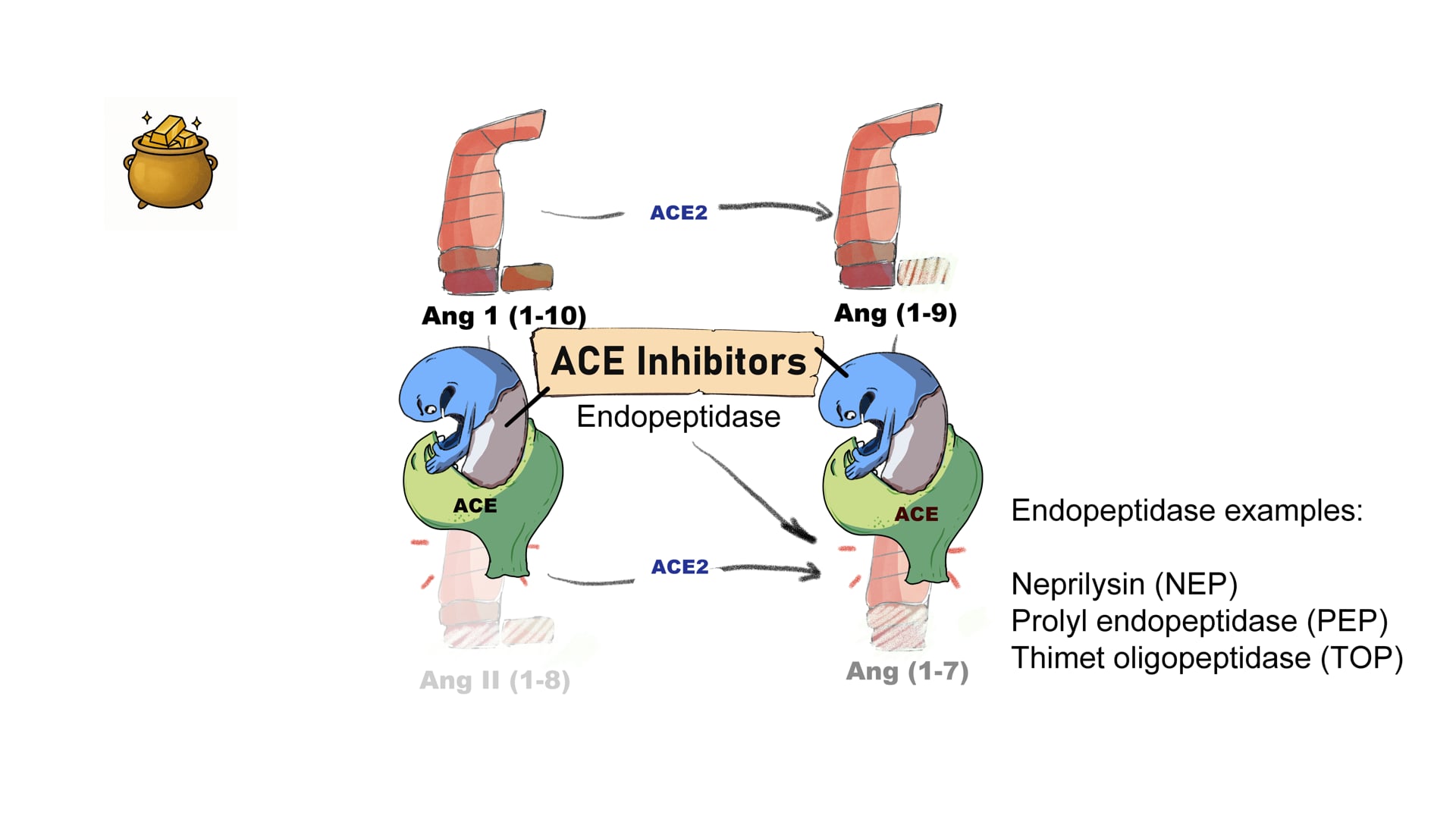
An in-depth CME lecture on the role of ACE inhibitors (ACEIs) in the management of hypertension. Drawing from Goodman & Gilman’s The Pharmacological Basis of Therapeutics, this session explores how ACE inhibition reduces vascular resistance and blood pressure, enhances renal blood flow, and increases arterial compliance.
We will also examine clinical nuances, such as variable patient responses based on renin activity, the effects on cardiac function and baroreceptor reflexes, the role of aldosterone, and strategies for combining ACEIs with diuretics or calcium channel blockers for optimal control.
Practical pearls for safe prescribing, monitoring, and avoiding complications like hyperkalemia will be highlighted.
This lecture is designed for healthcare students, clinicians, residents, and healthcare professionals seeking a deeper understanding of ACE inhibitors as first-line therapy in hypertension management.
Learning Objectives:
By the end of this lecture, participants should be able to:
Explain the pharmacological mechanisms by which ACE inhibitors lower systemic vascular resistance and blood pressure.
Differentiate the variable patient responses to ACEIs based on plasma renin activity, angiotensin II sensitivity, and tissue-level factors.
Describe the renal effects of ACE inhibitors, including changes in renal blood flow, glomerular filtration, and filtration fraction.
Assess the impact of ACE inhibitors on arterial compliance, cardiac output, baroreceptor function, and sympathetic activity.
Identify potential adverse effects of ACE inhibitors, including hyperkalemia, and recognize patients at higher risk.
Evaluate clinical strategies for optimizing hypertension control by combining ACE inhibitors with diuretics, calcium channel blockers, or beta-blockers.
Apply best practices for safe prescribing, monitoring, and patient education when using ACE inhibitors in hypertension.
Learning Objectives:
By the end of this lecture, participants should be able to:
Explain the pharmacological mechanisms by which ACE inhibitors lower systemic vascular resistance and blood pressure.
Differentiate the variable patient responses to ACEIs based on plasma renin activity, angiotensin II sensitivity, and tissue-level factors.
Describe the renal effects of ACE inhibitors, including changes in renal blood flow, glomerular filtration, and filtration fraction.
Assess the impact of ACE inhibitors on arterial compliance, cardiac output, baroreceptor function, and sympathetic activity.
Identify potential adverse effects of ACE inhibitors, including hyperkalemia, and recognize patients at higher risk.
Evaluate clinical strategies for optimizing hypertension control by combining ACE inhibitors with diuretics, calcium channel blockers, or beta-blockers.
Apply best practices for safe prescribing, monitoring, and patient education when using ACE inhibitors in hypertension.
















Write A New Comment
0 Comments